Sunday, April 01, 2012

Karen Ho--The Culture of Wall St--MSNBC UP with Chris Hayes, April 1, 2012

Professor Karen Ho, Department of Anthropology, University of Minnesota
on MSNBC, Chris Hayes UP with Chris, April 1, 2012

Karen Ho, author of "Liquidated: An Ethnography of Wall Street," shares the findings from her book that pinpoint the source of the Wall Street culture that leads to corruption and fraud.


Friday, March 16, 2012

William O. Beeman--Nuclear Scenario Belies Iran-Saudi Relationship

Nuclear Scenario Belies Iran-Saudi Relationship

 Nuclear Scenario Belies Iran-Saudi Relationship
To listen to politicians and pundits in Washington, Iran and Saudi Arabia are on the verge of war. Conventional wisdom in Washington claims the reason is Iran’s “nuclear weapons program,” viewed as a “threat” by leaders in both Tel Aviv and Riyadh.

The nuclear scenario as presented by its proponents has two aspects: First, it is claimed that a nuclear armed Iran might launch an atomic bomb at Saudi Arabia. Second, it is claimed that a nuclear-armed Iran might trigger an “arms race” throughout the Middle East.

“Perhaps the only thing longer than Iran's animosity toward the United States is its hatred of Saudi Arabia,” wrote neoconservative scholar Michael Rubin, a resident at the American Enterprise Institute.

The October 11 article was echoed by another equally foreboding piece in Foreign Affairs that same day.

“The Saudis recognize that, once armed with nuclear technology, Iran will have a clear and fundamental strategic advantage,” warned Mohsen Milani. “As a result, Saudi officials have threatened to pursue a bomb should Iran successfully develop one.”

In fact there is no evidence of any move by the Saudi government to pursue such an effort. And while it is true that Iran and Saudi Arabia have had disputes over many years, these tensions have little or nothing to do with Iran’s nuclear program.

Land, Religion, History

Actual disputes between Iran and Saudi Arabia fall into three broad categories, these being territorial, sectarian and historical. None involve nuclear issues.

The principal territorial dispute involved the islands named aptly: Arabi and Farsi—small islets in the Persian Gulf claimed by both nations. The dispute was resolved in 1966 as the result of a state visit by then Shah Mohammad Reza Pahlavi to Riyadh, who agreed to delineate the sovereignty of each nation over the territorial waters surrounding the islands, but not the continental shelf underneath.

Sectarian differences are perhaps the most serious matter creating tension between the two nations. The most conservative Sunni Muslims in Saudi Arabia—members of the Wahhabi and Salafi movements—openly reject Shi’ism as legitimate Islam. Extreme religionists in these groups have occasionally opined that killing a Shi’a adherent is a blameless act, akin to killing a non-Muslim.

The sectarian tension is exacerbated by the fact that hundreds of thousands of Shi’a Muslims live in Saudi Arabia’s Eastern Province—the province in which the bulk of Saudi Arabian petroleum reserves are located. Last year’s protests in neighboring Bahrain – which hosts a majority Shi’a population—also sparked concern among Saudi rulers of a possible “Arab Spring” in their own kingdom. Most were quick to blame Tehran, though without substantiation.

An incident in 1987 brought these tensions to the surface in a particularly dramatic fashion. During the annual pilgrimage (the Hajj), Saudi officials attacked demonstrators in front of the Grand Mosque in Mecca. The demonstrators were ostensibly protesting Saudi support of Iraq in the long Iran-Iraq War. In the melee approximately 400 persons were killed, two-thirds of whom were Iranian.

The Saudis effectively cancelled the Hajj rituals that year. As a result Iranians attacked the Saudi Embassy in Tehran resulting in the death of one Saudi official. The Saudis cut diplomatic relations with Iran, making it impossible for Iranians to obtain visas for performing the Hajj.

Repairing Relations
As terrible as incidents like this are, Iran has assiduously worked to repair broken relations with the Saudis. A comprehensive cooperation agreement was signed between the two states in 1998, followed by a 2007 state visit to Riyadh by current Iranian President Mahmoud Ahmadinejad. That visit came on the heels of a trip to Tehran by Prince Bandar bin Sultan, known for his pro-American sentiments.

On his visit, Prince Bandar expressed the interest of the Saudi government in building and maintaining good relations with Iran. As Professor Paul Aarts of the University of Amsterdam writes for the Middle East Institute in October 2009, Iran and Saudi Arabia have a largely pragmatic relationship based on mutual interest, including the import of Iranian agricultural products and the adaptation of Saudi oil-field technology.

Such friendly gestures seem to contradict statements from 2008 by Saudi King Abdullah, released by Wikileaks two years later. In those documents, King Abdullah is quoted as urging the United States to “Cut off the head of the snake," referring to Iran.

Yet Abdullah’s mercurial private views seem to extend to most leaders in the Islamic world – including Pakistani President Zardari, whom he describes as the greatest obstacle to Pakistan's progress.

Two years earlier, in 2006, Abdullah was awarded Pakistan’s highest civilian honor, while in 2011 Pakistani Prime Minister Syed Yousaf Raza Gilani paid a state visit to Saudi Arabia, describing the trip as having “renewed Pakistan’s bonds with Saudi Arabia.”

Clearly, King Abdullah’s private pronouncements are at odds with his government’s public position.

In light of this overall pattern of harmonious improvement, incidents such as the FBI-claimed Iranian “plot” to assassinate Saudi ambassador to the United States Adel al-Jubeir in October 2011 seem far-fetched and improbable as most Middle East and security experts have claimed. Likewise occasional negative statements from one or another Saudi ruler regarding Iran—likely cheap sops both to U.S. officials who want to hear this, and to extremist Sunnis in the Kingdom—seem out of place in the overall pattern of accommodation.

Taken as a whole, the Iranian-Saudi relationship looks much like the relationship between any two strong neighboring states. There is some rivalry, occasional misunderstandings but continual contact and attempts to repair the damage.

The fact that Iran and Saudi Arabia share custody of the Persian Gulf, and thus have a special responsibility in this regard was recognized by the U.S. government before the Iranian Revolution of 1978-79 when the two nations were seen as “Twin Pillars” in a bulwark against Soviet influence. The Soviets are gone, but the relationship remains today.


William O. Beeman has lived and conducted research in the Middle East—especially the Persian Gulf region—since 1968. He is Professor and Chair of the Department of Anthropology at the University of Minnesota, and author of The “Great Satan” vs. the “Mad Mullahs”: How the United States and Iran Demonize Each Other. (University of Chicago, 2008).  His blog: “Culture and International Affairs” is found at
http://www.wbeeman.com

Sunday, March 11, 2012

Comments on "Lessons from Another War" (NY Times coverage of Iran's Nuclear Program)

Dear Friends,


Here are comments on the Arthur Brisbane article on Iran from this morning's New York Times <http://www.nytimes.com/2012/03/11/opinion/sunday/lessons-from-another-war.html?ref=opinion&comments#commentsContainer>. (FULL ARTICLE IS POSTED BELOW IN THE PREVIOUS POST). At least some of the public are on the right track. Note reference to Trita Parsi and the Flynt and Hillary Mann Leverett (as well as Jon Stewart)--all very good signs that there are some people out there who have not yet been lobotomized by AEI, AIPAC and WINEP.

I will continue to post updates on my blog: "Culture and International Affairs" <http://www.wbeeman.com>

In the meantime I suggest that as many of you as can write Mr. Brisbane <public@nytimes.com> or post a comment on the story today before they close down comments.

Best,

Bill

    • Prof. Alfonse Romero
    • Turin
    Mr. Brisbane, your role is among the most important at the paper of record, and I want to thank you for the professionalism and fairness you bring to your job. Heaven help us not repeat the folly of Iraq.
    • John Smith
    • Centerville
    Again, a column from the Public Editor that firmly states, sort of, that although some might see a problem, well gosh diddly darn it, all opinions are valid.

    Considering the enormity (I use the word in its precise sense) of Judith Miller's "now-discredited coverage," coverage that helped lead the country into two wars of folly that we will be watching come back to haunt us for decades to come, the Times -- and no one associated with the Times -- gets to tell us that this time it's different.

    No. This time, the Times has to show the readers everything. You guys not only aren't allowed to screw it up, again, you also aren't allowed to complain that the coverage criticism isn't fair. You people blew through all our good will, and until you get up off your knees and stop taking dictation from the PR wonks and special interest groups, you don't get a free ride. You no longer have our trust, you certainly don't get our respect, and you certainly will not be considered to be professionals until you actually start being journalists again.

    As an aside, congratulations on that piece about the NYPD stats scandal. I read the original piece in the Village Voice the day before the rewrite that went in under a Times byline. Still, it was impressive. Imagine, the New York Times finally stops tiptoeing past the police reporting and is (second-handedly) critical of the NYPD,

    Keep it up. You might get to sit with the cool kids at lunch.
    • JimF
    • Los Altos Hills, CA
    How about offering Trita Parsi an opportunity for an OpEd?

    His new book outlines how reportedly Iran has twice, basically offered to agree to all the U.S. terms, but was rejected.

    Hey, even Jon Stewart covered this, but then that comic-cum-meta-newsman is doing the best journalism around nowadays:
    http://www.thedailyshow.com/full-episodes/thu-march-8-2012-trita-parsi

    Book:
    http://www.amazon.com/Single-Roll-Dice-Obamas-Diplomacy/dp/0300169361/re...
    • Usobjector
    • New York, ny
    Arthur, kudos to you for actually attempting to tackle the Times' glaring pro-war coverage of the situation with Iran. But you blame the lack of voices from inside Iran for the slanted coverage? How about the NYT Magazine devotes a full cover story to Flynt and Hilary Leveretts' perspective on war with Iran? http://www.huffingtonpost.com/flynt-and-hillary-mann-leverett

    Jill Abramson understands that it's crucial for the NY Times to get this right. Judith Miller destroyed the reputation of the NYT with her compromised reporting that improperly pushed the war in Iraq on the American people. Don't fall for Nigerian yellowcake, babies thrown from incubators, or troops doped up with Viagra to rape Nigerian women. It's all disinformation.
    • Guido Baccaglini
    • La Jolla
    II agree. It could be extremely beneficial for all of us to understand who is really in power in Iran and what it is Iranian policy toward Israel and toward Iran nuclear development. To diffuse the present crisis, it would suffice for Iran to recognize the right to exist of the State of Israel (it is not going away) and demand for a Middle East nuclear free area in exchange for renouncing to its nuclear ambitions.
    It is an open secret that Israel has between 60 to 80 atomic bombs (see Google) and that does not allow international inspectors in its nuclear facilities since it has not signed the Non Proliferation Treaty. It seems reasonable to me that, if Iran recognize the State of Israel and renounce to its nuclear ambitions, Israel should also be doing the same including dismantling, under international supervision, its entire nuclear arsenal and its facilities to enrich uranium.
    • Charles Gerard Larkin
    • Estero, FL
    Was editor Jill Abramson out to lunch when this past week's 'Room for Debate' on whether Israel Should Adopt a Nuclear Ban was restricted to seven participants who all happened to apologists for a nuclear Israel? (See 3/8/12)

    What kind of a 'debate' is it when all parties spout the same line?

    As another reader wrote in response to THAT bit of journalistic bias:

    '...it is telling that in a topic on the Middle East, yet again the only voice the NY Times publishes is an Israeli or Jewish one. What of the Iranians? The Iraqis? The Egyptians? Is it really so hard to find one of them for your articles?'

    And how about the Europeans, the Chinese, the Indians, and the rest of us who may be incinerated in a global inferno should the nuclear Middle East go apocalyptic?
    • Thomas Lee, M.D.
    • Torrance, CA
    Absolutely. Can we stop fighting Israel's wars? The loose talk of attacking Iran from these Republican warriors - Santorum, Romney, Newt - who have never served is the height of hypocrisy. Neither have any of their numerous children ever served. It is too easy to ask some one else's children to die or be crippled. Where is the discussion of how the theft of Palestinian lands for Jewish settlements is the festering sore feeding this hatred of Israel and America in the Mideast? One can believe in a homeland for the Jewish people without accepting that God gave them a right to expropriate Palestinian land.
    • gedel0
    • NYC
    With all due respect, the Times is not (or is no longer) the only credible source of international news that is widely available. So it needn’t castigate itself if some find its coverage slanted in one direction or another. Other highly reliable sources are available for those who might like a second opinion in English: the BBC, the Guardian, Al Jazeera and France 24, for example. The Times might even keep an eye on them.
    • Marc Kagan
    • New York
    Let me comment on the Times' coverage of the IAEA demand to access Parchin. In the last month, my high school class met with members of the Iranian mission to the UN, State Department officials on the Iranian desk and IAEA staff.
    The Iranians said - and this should not be surprising to anyone who knows the history - they felt bullied. The State Department said, the US and Iran are not equals at the negotiating table. Hmmm; maybe true, but also, to the Iranians, confirming their perception.
    The IAEA told us that because Parchin is not a nuclear site, their demand to access is based on reports from other nations that the Iranians are working on triggering technology there. Parchin is also where the Iranians do their military research. So an IAEA team investigating Parchin sees far more than whether there are nuclear fingerprints. When it says, "what's behind that door?" it gets to look at the whole R&D program of the Iranians. The Iranians can reject certain inspectors by not issuing visas, but it's hard to imagine that word on what's behind those doors doesn't get back to the CIA and Mossad.
    None of this comes out in the Times reporting, which strongly suggests that in failing to give access to Parchin the Iranians are just being unreasonable, or have something to hide. Maybe. But the Iranians, who feel bullied, now have also been put in a box - damned if they do, damned if they don't, albeit in different ways. It's incumbent on the "newspaper of record" to make this clear.
    • Bernice
    • St Paul, MN
    Thank you for this critical look at coverage of the real danger that, in my opinion, Iran faces from the current Israeli government. The Christian Science Monitor has published the results of a couple of recent polls of the Israeli people, who are far from supportive of the neocon Netanyahu. The results printed March 1 showed only 22% favoring an attack with or without US help, 43% favored an attack if the US would support it, and 32% were opposed to an invasion of Iran under any circumstances.

    Israel and the US share a healthy peace movement that we don't hear a lot about, but perhaps should.

    I'd like to see coverage, too, of the still-clinging-to-life neoconservative movement in the United States, where the Senate troika of McCain, Lieberman and Graham beat the drums loudly for military action against Iran before it is "too late." Like Iraq, Iran is part of the Axis of Evil that was to be invaded one by one.

    And perhaps a reminder of the fact that, as reported in the January Journal of the American Academy of Sciences, Iran has not drilled new oil wells to replace those not too far from exhaustion and has not maintained its refining capacity. As a result, it has to export oil and import expensive refined gasoline, which it sells to its population at a loss. This is why Iran really does need to develop new sources of energy and why we shouldn't assume that its nuclear program is anything but what Iran says it is. Inspections yes; unwarranted paranoia no.
    • Rebecca Lesses
    • Ithaca, NY
    This strikes me as a remarkable naive column. You're faulting the Times for its coverage of Iran when the Times can't get reporters in there. You're also ignoring the many calls made quite recently for the destruction of Israel by the Iranian leadership. Juan Cole is not the last word on translations from Persian to English - the Iranian leadership has been consistently anti-Israel for decades.

    The Times is also explicitly calling for negotiations, not for war, and has examined its own coverage of the Iranian crisis quite critically.

    A question is - what does it mean to "get it right this time"? Simply to do the opposite of what the Times did before the Iraq War, which could mean missing aggressive moves by the Iranians - bending over backward? This is not the same situation as Iraq, and it would be good if you could recognize that.
    • Charles E. Frankel
    • Honolulu, Hawaii
    I wish the Times would report on whether the Vienna-based nuclear agency inspects Israel's nuclear weapon program.

    charlesfrankel@hawaiiantel.net
    • Christian Haesemeyer
    • Los Angeles
    So if I understand the public editor correctly then all is fine because the two points of view are presented: that we should bomb Iran in an illegal war of aggression now; or that this would be ineffective and we should give starving the Iranian people more time. This is COMPLETELY missing the point of the criticism discussed. while various Israeli spooks and generals are given space to expound their racist views, not a SINGLE op-ed piece has been published of late supporting the opinion of the vast majority of the peoples of the world - that neither sanctions nor bombing or invasion are justified, that Iran is no threat to anyone but has very good reason to prepare to defend itself, that the nuclear weapons that do exist in the Middle East - in Israel, and on US warships - are indeed a huge problem that needs to be addressed. Neither is any of this reported in the news section; again, the opinions of the vast majority of the global population is utterly ignored. So yes, this is EXACTLY like the run-up to the Iraq war.
    • Michael Wolfe
    • Henderson, Texas
    The 'official' Iranian government view in English is available on:

    http://www.presstv.ir/

    The Times should at least watch it.

    There's also the right-wing

    http://www.thememriblog.org/iran

    which monitors Iranian TV and posts the most incendiary clips with subtitles.
    • jackcb
    • nj
    What are the consequences of attacking Iran? The only gain anybody claims is a delayed nuclear program for a few years, whether building a bomb. It won't stop them, only slow them. Then what?

    No denying the attack is an act of war. But safe, since Iran can't retaliate militarily. If the Mullahs have nukes already, they know using them is national suicide. So out come the best weapons they have: Oil and Money. We'd better be ready for the assault.

    Oil prices will shoot up as Iran closes it's pipelines and sabotages oil production & shipping by blowing up wells, processing plants and shipping facilities. Kuwait, Iraq and the Saudis are easy targets. Tankers are vulnerable to artillery throughout the Gulf. Don't forget the Strait of Hormuz blockade, either.

    Money gives the attacks Global Scope. Cash, weapons and recruits for sea-going pirates, terrorist groups and lone bombers. Stoking bushfire wars in Africa. Internet attacks. It gets really ugly, fast.

    But if we start it, we can't end it unless Iran negotiates a deal. Forget invading. We know how that turns out. No rose strewn victory parade and for sure no Nobel Peace prizes.

    Leave the military out of it. As leader of the pack we have far less control than we think. See Afghanistan, Iraq, Somalia, etc. Let's be a Sleeping Dog instead. Ready to go all out if awakened, but meantime asleep, dreaming of rabbits while in our carrier atop a station wagon, heading for a Canadian vacation...
    • Stoys
    • Los Angeles
    Epic fail. This introspection comes only after the administration made it clear there would be no war for Israel. The NYT was all too happy to beat the drums of war for the past several months. Lame.
    • Len Charlap
    • Princeton, N.J.
    1. It is very difficult to get at the truth from either a closed government like Iran's or a diverse and even chaotic one like ours.

    2. More important than trying to read minds are the technical problems Iran faces. I have read in the foreign press of Iran's difficulties with the metallic state of its refined uranium, of computer problems, etc. Most of thes receive little coverage in the Times.

    3. The Times also gives short shrift to what our intelligence really says. What is the situation? Does our best intelligence say Iran gave up its weapons program in 2003?

    While I understand that the Times believes that personal comments are more important than real data, the best data we have, I think this topic is too important for man-in-the-street journalism.
    • Imre Farkas
    • West Windsor, NJ
    It is not a questionable assertion that Iran’s leaders seek the eradication of Israel, It is their often stated intention.
    • Daniel Pfeiffer
    • Kingston, NY
    NYT Pick
    Good on you for your caution on Iran, and I was willing to give you the benefit of doubt on this as I read through this column (and your recent articles of late on Iran). But then you let loose in the end that the Times has an 'opportunity' to get it right this time. This phrasing seems to suggest that the Times hasn't learned a thing from its irresponsible reporting on Iraq. 'Opportunity?'

    You're still my go-to home page for the day's news, but I often find myself seeking out the stories behind your headlines elsewhere due to pronouncements like these - places where unbiased, informative and compelling story telling is held as a core obligation to an informed citizenry rather than an 'opportunity'.
    • Muralita
    • Mumbai, India
    Israeli leadership has framed the debate as Iran or Israel. Netanyahu's argument concerning the "dangers of not attacking", is disingenuous and dishonest.
    Two questions must be answered:
    1. Can Iran really afford to attack a nuclear armed and militarily highly capable Israel even if it acquires a nuke?
    2. Is Iran the end of an "Islamic bomb" or are there other sources which will take the place of Iran once the latter's capacity is destroyed?

    The answer to 1above is a clear and resounding NO. Iran cannot even hope to match Israel's war making capabilities notwithstanding what its mullahs claim There is no reason to doubt that the mullahs understand the extent of Israel's capabilities or its readiness and willingness to defend itself.

    In answer to question 2, an attack on Iran will completely turn the muslim world against the non-muslim one and hand over the leadership of the former to Iran. The resulting vacuum could be filled by Pakistan if only to distract its populace from its own internal issues. Pakistan has over 100 nukes and its control over them is suspect.

    Netanyahu is unfortunately relying on Israel's unquestionable military abilities and is not even attempting to practice statesmanship.

    In India we say that Crocodiles and an 'irate men" have only one thing on their minds. Till now I always thought that the mad Mullahs of Iran were the angry men. I am not so sure any more.
    • Christian Miller
    • Saratoga, California
    I would suggest that the NYT could provide a great service by doing an in depth analysis of the likely result of Iran having a nuclear weapon and the likely result of a US bombing attack on Iran.
    • William O. Beeman
    • Minneapolis
    NYT Pick
    Thanks to Mr. Brisbane for a much-needed review of the Times coverage of the Iranian nuclear program. Press coverage on Iran for many years has often been driven not by facts, but by political and ideological bias, especially since 2000. The absence of diplomatic relations with Iran has made it difficult to understand Iranian culture, politics and thought--but not impossible. There is a great deal of deep expertise on Iran for those who want to find it--but it does not reside in Washington think-tanks, whose partisan views have now become dominant in press coverage on Iran.

    Iran is a richly fascinating and frequently frustrating society. Short exposure is not likely to yield an accurate reading of Iranian actions. If the United States wants to make progress with Iran, first we must find a way to talk to Iranians. Modest diplomatic relations and talks on areas of mutual interest are the key. A "breakthrough" to Iran would change the world in a dramatic way, and is the best guarantor for peace in the future--and also the best guarantor for the safety and security of all in the region--including Iranians, Israelis and their neighbors..

    William O. Beeman
    "Culture and International Affairs" http://www.wbeeman.com
    • CBJ
    • Cascades, Oregon
    "plus one saying that American intelligence analysts continued to believe there was no hard evidence that Iran had decided to build a nuclear bomb."

    How many articles playing to misinformed hysterical coward war mongers including John McCain who sang Bomb, Bomb, Bomb Iran four years ago to the tune of the Beachboys Barbara Ann? Twenty, maybe since January 1. I have not kept count, though the ratio of sane to insane is high. The Times never fails to focus on conflict and provocative rhetoric over an honest presentation of factual information. That Iran would launch a nuclear attach on Israel is so unlikely as to be unworthy of serious consideration. Incessant yammering about "wipe Israel off the map" is infantile. As has happened so often in human history the coward alarmist are leading us down the path to disaster. To ascribe the mass hysteria required to turn Iran into a suicide bomber on a national scale is plainly not in the realm of the possible. Is it not universally agreed that the West would obliterate all Iran's political leaders and national institutions in short order? Basically sending the country back fifty to one hundred years and in the process wiping out the economy? People on the intelligent rational side of the discussion are sick of the dog being wagged while little consideration is given to consequences of a preemptive attach. The recent New York Review of Books piece on Hebron is instructive and contrast strongly with the Times narrative.

Arthur Brisbane--Lessons From Another War (New York Times)

The Public Editor

Lessons From Another War

Commentary by William O. Beeman: I had an hour's conversation with Mr. Brisbane on March 6, 2012, following a number of communications with him concerning the Times coverage of the Iranian nuclear program. I pointed out approximately a dozen examples of inaccurate reporting on Iran's nuclear program. The most egregious fault was the continuing reference to "Iran's nuclear weapons program"--something for which there is no evidence whatever. The Times found many ways to imply that Iran actually had a proven nuclear weapons program--by referring to it in unsigned editorials, by adding the phrase to quotes from the International Atomic Energy Agency, by adding misleading headlines to otherwise accurate reporting, quoting sources that referred to a "weapons program" uncritically, and using "weasel words" to imply that the weapons program existed without substantiating those claims. I am happy to supply these examples for anyone who wishes to have them. In the meantime, please contact Mr. Brisbane to thank him for this much-needed corrective.

“WE talk about generals fighting the last war,” said Tim McNulty, who served as foreign editor for The Chicago Tribune during the Iraq war. “I think journalists also do.”

Phone: (212) 556-7652
Address: Public Editor
The New York Times
620 Eighth Avenue
New York, NY 10018

Nine years after the start of the Iraq war, the scene has shifted to Iran, and Mr. McNulty has a more detached view of events, as co-director of the National Security Journalism Initiative at Northwestern University. Now he cautions journalists against falling again for a kind of siren song: “the narrative of war.”
“The narrative of war, or anticipating war, is a much stronger narrative than the doubters have,” he said. “It is an easier story to write than the question of, well, is it really necessary?”
In recent months I have heard from many readers concerned that The New York Times is falling for this siren song, the narrative of war, in its coverage of Iran’s nuclear program. Not infrequently, readers and critics invoke Judith Miller’s now-discredited coverage in The Times of Saddam Hussein’s supposed weapons of mass destruction, as if to say it is all happening again.
Among the criticisms are that The Times has given too much space to Israeli proponents of an attack on Iranian nuclear facilities; has failed to mention often enough that Israel itself has nuclear arms; has sometimes overstated the findings of the International Atomic Energy Agency; has repeated the questionable assertion that Iran’s leaders seek the eradication of Israel; has failed to analyze the Iranian supreme leader’s statement that nuclear weapons are a “sin”; and has published misleading headlines.
William O. Beeman, author of “The ‘Great Satan’ vs. the ‘Mad Mullahs’: How the United States and Iran Demonize Each Other,” told me he believes The Times’s coverage has contributed to a dangerous public misunderstanding of the situation.
“The conventional wisdom with regard to Iran is that Iran has a nuclear weapons program and that they are going to attack Israel and going to attack the United States,” said Mr. Beeman, who is chairman of the anthropology department at the University of Minnesota. “But all these things are tendentious and highly questionable.”
Mr. Beeman faulted The Times for mischaracterizing I.A.E.A. reports and for a “disconnect between headline and the actual material in the stories that really affects public opinion,” saying these problems raised a question about the “civic responsibility of The Times.”
This bill of particulars against The Times’s coverage weighs heavily, but it is clear to me that this is not a replay of the Judith Miller episode. I do find examples that support the complaints mentioned above, but also see a pattern of coverage that gives due credence to the counternarrative — not of war but of uncertainty and caution.
Jill Abramson, executive editor of The Times, told me the paper is “certainly mindful that some readers may see an echo of the paper’s flawed coverage of Iraq,” but she also noted distinct differences. This time, she said, the United States government is expressing doubts about weapons of mass destruction, not leading the drumbeat for war. And there is no question that Iran has a nuclear program; it’s just unclear whether it is for civilian or military use.
Times journalists “are mindful of our responsibility to be vigilant, skeptical and fair,” she said. “Last month, when the calls for striking Iran began to grow louder, we brought together the foreign and Washington desks and came up with a run of stories designed to examine closely the statements made by those on both sides of the argument, especially the rising calls for a military strike.
“A central argument on that side,” she added, “is that sanctions were not working and never would; that an Israeli strike would be easy and effective and might not draw the U.S. into war; and that Iran was weak, and unlikely to retaliate in the event of a strike.
She pointed to articles The Times has done on all those issues, plus one saying that American intelligence analysts continued to believe there was no hard evidence that Iran had decided to build a nuclear bomb.
These were all good articles, and all were played on Page 1. Getting the Iranian point of view, though, has proved far more elusive and is complicated by The Times’s difficulty gaining access to the country, which carefully controls foreign news media. Although The Times’s Robert F. Worth captured some Iranian voices in his Feb. 6 article on the impact of sanctions, The Times has not been able to report from within the country on a consistent basis.
The result is an asymmetry of perspective, something I heard frequently in conversations with others about the coverage. The Times, for example, ran a 7,627-word Sunday magazine article by the Israeli journalist Ronen Bergman about Israel’s calculations for a possible attack. No such word count can be tied to the Iranian point of view.
“There needs to be far more effort to get into the heads of Iranians, the policy makers and their people, to understand how this chess game is being played from their perspective,” said Tony Burman, former head of Al Jazeera English and Canada’s CBC News, and now a lecturer at Ryerson University’s School of Journalism in Toronto.
Kevin Klose, dean of journalism at the University of Maryland and former president of NPR, called for an effort to “carefully parse” the public statements of Iran’s leaders and publish analyses that capture the nuances.
Hooman Majd, an Iranian-American journalist who spent much of 2011 in Iran, observed that news coverage has left Americans with a caricatured understanding not only of Iran’s leaders but of its people “as being completely oppressed or completely lunatic.”
“Neither is accurate,” said Mr. Majd, author of “The Ayatollah Begs to Differ” and “The Ayatollahs’ Democracy.”
What is needed from The Times, he added, is more effort not only to get ordinary Iranian voices into the coverage but also to reach across the cultural divide to fully understand significant statements from the Iranian leadership, like the fatwa against nuclear weapons by Ayatollah Ali Khamenei, the supreme leader.
I share this view and believe the West’s inability to understand the other side’s leadership may have a parallel with the run-up to the Iraq war. Once again, the stakes are high for all involved, including The Times, which has an opportunity to get it right this time.
Follow the public editor on Twitter at twitter.com/thepubliceditor. The public editor can also be reached by e-mail: public@nytimes.com.

Tuesday, March 06, 2012

The Hoax Regarding Iran (part 1) --Lecture by William O. Beeman

The Hoax Regarding Iran (part 1)

March 1st, 2012  |  Published in Palestine-Israel and the Middle East, US Imperialism
“The Hoax Regarding Iran”

The 2006 doc film “Why We Fight” described the rise of the United States’ military–industrial complex, and its involvement with US led wars. The 2007 film “War Made Easy” provided a fresh look at the machinations of the United States’ propaganda system and its ability to push the public’s acceptance for war.

Despite these and countless other attempts to build a media-savvy US population, apparently, nearly half of the US population is still susceptible to pro-war propaganda delivered through the US media system.

In a humble way, Our World In Depth contributes 2 additional episodes dedicated to counter-propaganda regarding Iran, the current target of the US pro-war propaganda machine.
In presentation, along with open Q and A, professor and Middle East expert William Beeman debunks myths being propagated about Iran, including the hyped-up rhetoric about Iran’s nuclear program. Beeman suggests an urgent need to try to stop another lie-based attack on another country in the Middle East. (Feb. 2012, Minneapolis)

Sunday, March 04, 2012

Ramping up for the next war? U of M professor William Beeman sees the U.S. press, AIPAC and right-wing think tanks agitating for an attack on Iran (The American Jewish World)

http://www.ajwnews.com/archives/12749
The American Jewish World

Thursday, March 1st, 2012...12:24 pm

Ramping up for the next war?


U of M professor William Beeman sees the U.S. press, AIPAC and right-wing think tanks agitating for an attack on Iran

By DAVID RUBENSTEIN

The U.S. media is setting up the public for a military attack on Iran in a way that recalls the months leading up the Iraq war in 2003, according to Middle East expert William Beeman, chair of the University of Minnesota’s Department of Anthropology.
Beeman spoke and answered questions for more than two hours on Feb. 11, at the Lutheran Church of Christ the Redeemer in Minneapolis. Middle East Peace Now sponsored the talk.

Speaking before a sympathetic audience, he declared at the outset that an attack on Iran would be “madness,” and he cited a number of Israeli authorities who more or less agree with him. They include the former head of Mossad, Israel’s CIA, Meir Dagan, who last year called an Israeli preemptive strike on Iran “the stupidest thing I have ever heard.”

But right now, says Beeman, a wide swath of the U.S. press is promoting the idea through continual repetition of the claim that Iran’s nuclear industry is a potential stepping-stone to a weapons program — even though there is no evidence that a weapons program has been initiated.

“They have done very well,” he says, regarding the mainstream news media’s campaign to vilify Tehran. “Sit down next to someone on a plane, and ask what they think about Iran, and it’s likely to be ‘Iran has nuclear weapons and they are going to bomb Israel.’”

William Beeman: AIPAC has a completely unrealistic view of the interests of Israel. (Photo: David Rubenstein)William Beeman: AIPAC has a completely unrealistic view of the interests of Israel. (Photo: David Rubenstein)
It’s important to realize that Iran’s nuclear industry goes back 40 years, Beeman points out. “We sold it to them.” It took some arm-twisting, he adds. “We went to the Shah and said if you want to be modern nation, you must have nuclear power.”

Today there are compelling economic reasons for Iran to continue its nuclear program, according to Beeman. He cites 800,000 as the number of cancer patients currently getting radiation treatment in Iran. He notes, too, that Iran is the largest auto manufacturer in the Middle East and a producer of steel, as well as aluminum, which is particularly demanding of electrical power. At the same time, according to Beeman, in the current market it’s making more economic sense for Iran to sell natural gas to China than to use it for domestic energy needs.

The major push for the attack-Iran campaign, Beeman asserts, is coming from Israeli Prime Minister Benjamin Netanyahu and Ehud Barak, the defense minister, and their interest is, in part, political.

The Israeli coalition government, fragile from the beginning, is now threatened by economic unrest, including street protests, “and nothing works like an outside enemy.”

But Netanyahu’s interest goes much deeper than electoral politics, according to Beeman. He sees in Netanyahu something of a Churchill complex, in reference to the British wartime leader standing up to a world of Chamberlains, or appeasers. Beeman argues that Netanyahu’s thinking vis-à-vis Iran can be traced back to 1996, when he sought and received advice from American neoconservatives, in the form of a document called “A Clean Break: A New Strategy for Securing the Realm.” It promoted regime change, starting with Iraq, then Syria and then Iran

A similar strategy, with many of the same authors, was resurrected a year or two later by way of the Project for a New American Century.

According to Beeman, the idea of promoting regime change in Iran, whether by bombing or creating intolerable economic conditions, is a naïve fantasy. The early leaders of the Iranian revolution understood well that shakeups occur when dictators are toppled. As a result, he says, they set up a government that is “a miracle of baroque complexity,” with roughly 150 important decision-makers, staggered elections and interlocking offices.

Ahmadinejad, Beeman says, is a cog in that system; he should be regarded as something like a city manager, in a town that is run by a mayor and city council. In any case, according to Beeman, his threats have been overblown. Beeman maintains that the Jewish community in Iran, the largest in the Middle East outside of Israel, is relatively well off and free to travel, including to and from Israel.

Today in the United States, Beeman sees the push for an attack on Iran coming primarily from three groups: the American Israel Public Affairs Committee (AIPAC), the American Enterprise Institute and the Washington Institute for Near East Policy. AIPAC has extraordinary power, he says, making it clear to lawmakers that if they cross it they risk a frontal assault at election time, in part by having campaign donations diverted to their opponents.

It’s not easy to say that, Beeman acknowledges, without opening yourself up to a charge of being anti-Semitic, or anti-Israel.

“My personal opinion,” he says, “is that AIPAC has a completely unrealistic view of the interests of Israel. They reflect only the views of its most rabid right-wing politicians.”

Beeman suggested that those in the audience support a better alternative to AIPAC: “It’s called J Street.” He’s a member himself of the group that bills itself as “pro-Israel and pro-peace,” he says, even though he is not Jewish; “because I believe in J Street’s mission. I want the Israeli people to be happy and safe.”

(American Jewish World, 3.2.12)


--
William O. Beeman 
Professor and Chair 
Department of Anthropology 
University of Minnesota 
395 HHH Center 
301 19th Avenue S.  
Minneapolis, MN 55455 
(612) 625-3400 

Saturday, March 03, 2012

Adele Beeman--fabulous vocalist and composer

Adele Beeman is my sister and a fabulous vocalist and composer. You will love her jazz-inspired spiritual music.


ComScore
 

Wednesday, February 29, 2012

Gareth Porter--How the Media got the Parchin Access Story Wrong

How the Media got the Parchin Access Story Wrong

February 29th, 2012 |

Gareth Porter

Gareth Porter


Commentary by William O. Beeman: The mainstream news media (New York Times, Washington Post, PBS, NPR among others) have now made it a habit to radically distort events related to the Iranian nuclear program. The International Atomic Energy Agency is also under pressure from the U.S. Government to present Iran's situation in the most negative light. The latest IAEA inspection tour in Iran was no exception. It was widely reported that Iran had refused to allow the IAEA inspect a site at Parchin--a military base. Now reporter Gareth Porter tells the truth about that encounter and it is clear that the news reports were misleading. This joins a huge long list of distorted news reports on Iran. All citizens must now be on guard to question news media reporting on Iran very skeptically. 

News media reported last week that Iran had flatly refused the International Atomic Energy Agency (IAEA) access to its Parchin military test facility, based on a statement to reporters by IAEA Deputy Director General, Herman Nackaerts, that “We could not get access”.

Now, however, explicit statements on the issue by the Iranian Ambassador to the IAEA and the language of the new IAEA report indicate that Iran did not reject an IAEA visit to the base per se but was only refusing access as long as no agreement had been reached with the IAEA governing the modalities of cooperation.
That new and clarifying information confirms what I reported February 23. Based on the history of Iranian negotiations with the IAEA and its agreement to allow two separate IAEA visits to Parchin in 2005, the Parchin access issue is a bargaining chip that Iran is using to get the IAEA to moderate its demands on Iran in forging an agreement on how to resolve the years-long IAEA investigation into the “Possible Military Dimensions” of the Iranian nuclear program.

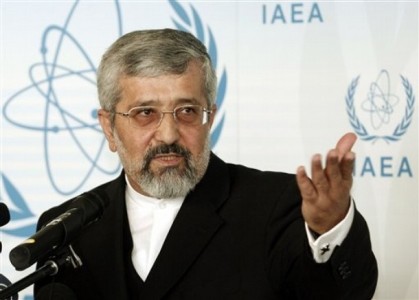
In an email to me and in interviews with Russia Today, Reuters, and the Fars News Agency, the Iranian Permanent Representative to the IAEA, Ali Asghar Soltanieh, said Iran told the high-level IAEA mission that it would allow access to Parchin once modalities of Iran-IAEA cooperation had been agreed on.
“We declared that, upon finalization of the modality, we will give access [to Parchin],” Soltanieh wrote in an email to me.

In the Russia Today interview on February 27, reported by Israel’s Haaretz and The Hindu in India but not by western news media, Soltanieh referred to two IAEA inspection visits to Parchin in January and November 2005 and said Iran needs to have “assurances” that it would not “repeat the same bitter experience, when they just come and ask for the access.” There should be a “modality” and a “frame of reference, of what exactly they are looking for, they have to provide the documents and exactly where they want [to go],” he said.

But Soltanieh also indicated that such an inspection visit is conditional on agreement about the broader framework for cooperation on clearing up suspicions of a past nuclear weapons program. “[I]n principle we have already accepted that when this text is concluded we will take these steps,” Soltanieh said.
The actual text of the IAEA report, dated February 24, provides crucial information about the Iranian position in the talks that is consistent with what Soltanieh is saying.

In its account of the first round of talks in late January on what the IAEA is calling a “structured approach to the clarification of all outstanding issues”, the report states: “The Agency requested access to the Parchin site, but Iran did not grant access to the site at that time [emphasis added].” That wording obviously implies that Iran was willing to grant access to Parchin if certain conditions were met.

On the February 20-21 meetings, the agency said that Iran “stated that it was still not able to grant access to that site.” There was likely a more complex negotiating situation behind the lack of agreement on a Parchin visit than had been suggested by Nackaerts and reported in western news media.

But not a single major news media report has reported the significant difference between initial media coverage on the Parchin access issue and the information now available from the initial IAEA report and Soltanieh. None have reported the language of the report indicating that Iran’s refusal to approve a Parchin visit in January was qualified by “at that time”.

Only AFP and Reuters quoted Soltanieh at all. Reuters, which actually interviewed Soltanieh, quoted him saying, “It was assumed that after we agreed on the modality, then access would be given.” But that quote only appears in the very last sentence of the article, several paragraphs after the reiteration of the charge that Iran “refused to grant [the IAEA] access” to Parchin.

The day after that story was published, Reuters ran another story focusing on the IAEA report without referring either to its language on Parchin or to Soltanieh’s clarification.

The Los Angeles Times ignored the new information and simply repeated the charge that Iran “refused to allow IAEA inspectors to visit Parchin military base”. Then it added its own broad interpretation that Iran “has refused to answer key questions about its nuclear development program”. Iran’s repeated assertions that the documents used to pose questions to it are fabricated were thus dismissed as non-qualified answers.

The Parchin access story entered a new phase today with a Reuters story quoting Deputy Director General Nackaerts in a briefing for diplomats that there “may be some ongoing activities at Parchin which add urgency to why we want to go”. Nackaerts attributed that idea to an unnamed “Member State”, which is apparently suggesting that the site in question is being “cleaned up”.

The identity of that “Member State”, which the IAEA continues to go out of its way to conceal, is important, because if it is Israel, it reflects an obvious interest in convincing the world that Iran is working on nuclear weapons. As former IAEA Director-General Mohamed ElBaradei recounts on p. 291 of his memoirs, “In the late summer of 2009, the Israelis provided the IAEA with documents of their own, purportedly showing that Iran had continued with nuclear weapon studies until at least 2007.”

The news media should be including cautionary language any time information from an unnamed “Member State” is cited as the source for allegations about covert Iranian nuclear weapons work. It could very likely be coming from a State with a political agenda. But the unwritten guidelines for news media coverage of the IAEA and Iran, as we have seen in recent days, are obviously very different.

Saturday, February 25, 2012

Interview with William O. Beeman on U.S. Iranian Relations 2-24-2012

On February 24, 2012 I was interviewed by Ahmed Tharwat for his cable program BelAhdan. The interview is below. We also deal with U.S.-Israel relations.


The video can also be accessed at

http://youtu.be/X5oY0IAjlB4

or

http://www.youtube.com/watch?v=X5oY0IAjlB4&feature=youtu.be

Thursday, February 23, 2012

Porter--Iran Holds Up Access to Parchin for Better IAEA Deal (IPS)

Commentary by William O. Beeman: The recent IAEA inspection team in Iran declared that their mission had been a "failure" largely because they were not allowed to visit the Parchin military base. Historian and journalist Dr. Gareth Porter analyzes this incident pointing out that Parchin had been inspected before, that the IAEA exceeded its mission, and that, in general, this mission was very different than characterized by the IAEA. In short, the inability of the IAEA to get access to Parchin does NOT in any way prove that Iran has a nuclear weapons program.There is still no evidence whatever that Iran has a program to manufacture nuclear weapons.


Iran Holds Up Access to Parchin for Better IAEA Deal

Analysis by Gareth Porter*


WASHINGTON, Feb 23 (IPS) - The failure of a mission by the International Atomic Energy Agency (IAEA) to get Iranian permission to visit a military testing site mentioned in its latest report has been interpreted in media coverage as a stall to avoid the discovery of confirming evidence of past work on nuclear weapons.
But the history of Iranian cooperation with the IAEA on carrying out inspections at the Parchin military testing centre, as well as a previous IAEA-Iran work programme agreement, suggests that Iran is keeping permission for such a visit as bargaining leverage to negotiate a better deal with the agency.

The IAEA statement Wednesday emphasised the fact that the mission to Tehran had been denied permission to visit the site at Parchin. That prompted Associated Press correspondent in Vienna George Jahn to call Iran's refusal to agree to an IAEA visit to Parchin "stonewalling" and evidence of "hard line resistance" to international pressure on its nuclear programme.

International Herald Tribune blogger Harvey Morris wrote that Iran's strategy was to "play for time".

But access to Parchin was discussed as part of broader negotiations on what the IAEA statement called a "document facilitating the clarification of unresolved issues" in regard to "possible military dimensions" of Iran's nuclear program. The negotiations were focused on what cooperation the IAEA is demanding and what the agency is ready to offer in return for that cooperation.

Judging from past negotiations between Iran and the IAEA, Iran is ready to offer access to Parchin as well as other sites requested by the agency as part of an agreement under which the IAEA would stop accusing Iran of carrying out covert nuclear weapons experiments.

The IAEA's position in the negotiations was revealed by the AP's Jahn, who reported that the agency mission had hoped to get Iranian agreement to meetings with "scientists suspected of working on the alleged weapons program" and to "inspect documents related to nuclear weapons work".

The September 2008 IAEA report said the agency had "proposed discussions with Iranian experts on the contents of the engineering reports (on the Shahab-3 missile) examining in detail modeling studies…."

Iran has rejected such demands as threatening its legitimate national security interests, in violation of the IAEA statute.

The scientists that the agency is demanding to see are publicly known officials of Iran's military research institutions. Even before Israel had begun assassinating Iranian scientists, Iran had made it clear it will not give the IAEA physical access to any individual scientists.

The IAEA wants to visit a specific site at Parchin because of information from an unnamed member state, cited in its November 2011 report, that Iran had "constructed a large explosives containment vessel in which to conduct hydrodynamic experiments" – tests of nuclear weapons designs without the use of fissile material.

The report said the construction had been carried out at Parchin military complex in 2000 and that the IAEA had satellite imagery that was "consistent with" that information, meaning only that there were structures that could have housed such a vessel at Parchin in 2000.

The previous history of IAEA inspections at Parchin make it clear, however, that Iran knew it had nothing to hide at Parchin after 2000.

In 2004, John Bolton, the point man in the George W. Bush administration on Iran, who coordinated closely with Israel, charged that satellite imagery showed a bunker at Parchin appropriate for large-scale explosives tests such as those needed to detonate a bomb that would use a neutron trigger.

Bolton put heavy pressure on the IAEA to carry out an investigation at Parchin. A few months later, Tehran agreed to allow the agency to select any five buildings and their surroundings to investigate freely.

That gave U.S. and Israeli intelligence, as well as IAEA experts, an opportunity for which they would not have dreamed of asking: they could scan satellite imagery of the entire Parchin complex for anything that could possibly suggest work on a nuclear weapon, including a containment vessel for hydrodynamic testing, and demand to inspect that building and the grounds around it at their leisure.

In January 2005, an IAEA team visited Parchin and investigated the five areas they had chosen, taking environmental samples, but found nothing suspicious. In November 2005, Iran allowed the IAEA to do the same thing all over again on five more buildings of its own choice.

The Iranian military and nuclear establishment would never have agreed to such terms for IAEA inspection missions at Parchin - not once but twice - if they had been concealing a hydrodynamic test facility at the base.

Other information suggests that no such vessel ever existed at Parchin. The November report claimed the IAEA had obtained information on the dimensions of the containment vessel from the publication of a foreign expert identified as someone who worked "in the nuclear weapons program of the country of his origin".

That was a reference to Vlachyslav Danilenko, a Ukrainian scientist who has acknowledged having lectured in Iran on theoretical physics and having helped the country build a cylinder for production of nano-diamonds, which was his research specialty. However, Danilenko has firmly denied ever having done any work related to nuclear weapons.

The claim that the dimensions of the putative bomb test chamber at Parchin could be gleaned from a publication by Danilenko is implausible.

The report said the bomb containment chamber at Parchin was "designed to contain the detonation of 70 kilograms of high explosives". Danilenko's patented 1992 design for a cylinder for nano-diamond production, however, was built to contain only 10 kg of explosives.

Former IAEA weapons inspector and nuclear weapons expert Robert Kelley has pointed out, moreover, that a container for only 70 kg of explosives could not possibly have been used for hydrodynamic testing of a nuclear weapon design.

The negotiations on a "framework" for Iran's cooperation with the IAEA recall the negotiation of a "work programme" in August 2007 aimed at resolving a series of issues on which the IAEA Safeguards Department suspected links to nuclear weapons. The issues included experiments involving the extraction of polonium-210, plutonium experiments and possible military control of the Gchine uranium mine.

In previous years, Iran had failed to provide sufficient information to overcome those suspicions. But after the negotiation of the "work programme", Iran began to move with dispatch to provide documentation aimed at clearing up the six remaining issues.

The IAEA acknowledged that all six of the issues had been effectively resolved in two reports in late 2007 and early 2008.

The reason for the dramatic change in cooperation was simple: the IAEA had pledged that, in return for Iran's resolving the six issues, "the implementation of safeguards in Iran will be conducted in a routine manner." That was seen as a significant step toward finally getting a clean bill of health from the agency.

But the IAEA instead then began focusing its questioning entirely on the purported Iranian documents of unknown origin and doubtful authenticity which the IAEA called the "alleged studies".

*Gareth Porter is an investigative historian and journalist specialising in U.S. national security policy. The paperback edition of his latest book, "Perils of Dominance: Imbalance of Power and the Road to War in Vietnam", was published in 2006.

(END/2012)